
FATED HEARTS
38 episodes with Li Qin and Chen Zhe Yuan. Photo credits My Dramalist & SensCritique.
FANTASY/ COSTUME & PERIOD
4/7/20262 min read
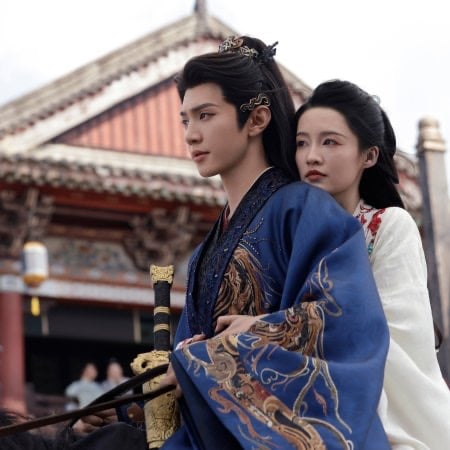
Fated Hearts pretends to be a story about fate, but it is really a quiet, aching lecture on the power of our own decisions. And the most valuable lessons come not from the main lovers, but from those the drama almost forgets.
First, meet Fu Yixiao—the true female lead. A military commander of Jinxiu and the world’s finest archer, she is betrayed, loses her memory, yet never loses her backbone. Yixiao teaches us that strength is a choice, not a memory. Even when everything is taken from her, she rebuilds herself with grit and precision. She does not wait to be saved; she saves others. Her life whispers: You are not what happened to you. You are what you do next.
Then there is the Prince of Zhennan, Xia Jingshi. Born to an unofficial consort, stripped of his birthright, sent to the frozen border while his younger brother takes the throne. Humiliation could have made him wise. Instead, it makes him a villain. His obsession with Yixiao—the woman he nearly kills—reveals a man who confuses possession with love. The lesson here is brutal: rejection, if met with bitterness instead of resilience, will rot a noble heart from the inside. He is not born evil; he chooses evil, one small, resentful step at a time.
The drama also offers two heartbreaking "what ifs." The King of Jinxiu does not need to die. Gentle to his beloved, perceptive, and steady, he is perfect for Feng Xiyang. Together, they could have grown better and ruled together—a quiet kingdom built on trust rather than vengeance. His death is not fate; it is a script's failure. And Feng Suige, the First Prince of Susha, should have become Emperor for sure. After all his battles and sacrifices, leaving his fate open-ended is a disservice. True leadership is not a burden to run from; it is a responsibility to embrace.
In the end, Fated Hearts moves us because it feels painfully real. Yixiao shows us resilience. The Prince of Zhennan warns us against bitterness. Jinxiu’s king reminds us that the right partner is often the one we overlook. And Suige teaches us that sometimes, walking away is not freedom—it is cowardice dressed in philosophy. The choices are ours. Choose well.